Tag: technology

  • The Future of Business Communication: Why PBX Systems Are Essential

    The Future of Business Communication: Why PBX Systems Are Essential

    In the rapidly evolving landscape of business communication, organizations are continually seeking innovative solutions to enhance their connectivity and operational efficiency. The Private Branch Exchange (PBX) system has emerged as a pivotal technology that not only streamlines communication but also supports the growing demands of modern businesses. As companies navigate the complexities of remote work, global operations, and customer engagement, understanding the significance of PBX systems becomes essential.

    What is a PBX System?

    A PBX system is a private telephone network used within an organization to manage internal and external communication. Unlike traditional phone systems, which require individual lines for each phone, PBX systems allow multiple users to share a limited number of outside lines. This technology has evolved significantly from its early days as a simple switchboard to sophisticated cloud-based solutions that integrate seamlessly with various communication tools.

    PBX Phone System

    The Shift Toward IP and Cloud-Based PBX

    The introduction of Internet Protocol (IP) technology has transformed PBX systems, leading to the rise of IP-PBX solutions. These systems utilize VoIP (Voice over Internet Protocol) to transmit voice data over the internet, offering significant advantages over traditional telephony. Cloud-based PBX services have become particularly popular due to their cost-effectiveness, flexibility, and scalability. Businesses can now manage their communication infrastructure without the need for extensive on-premise hardware, allowing them to adapt quickly to changing operational needs.

    Key Features of Modern PBX Systems

    Modern PBX systems come equipped with a variety of features designed to enhance business communication:

    • Call Routing: Automatically directs incoming calls to the appropriate department or agent based on predefined criteria, reducing wait times and improving customer satisfaction.
    • Voicemail-to-Email: Converts voicemail messages into email format, allowing employees to access messages conveniently and ensuring that no important communications are missed.
    • Conference Calling: Facilitates virtual meetings with multiple participants, promoting collaboration among remote teams and clients.
    • Call Analytics: Provides detailed reporting on call activity, enabling businesses to analyze performance metrics and optimize their communication strategies.
    • Integration with Other Tools: Many PBX systems can integrate with Customer Relationship Management (CRM) software and other business applications, streamlining workflows and enhancing productivity.

    Benefits of Implementing a PBX System

    Cost Savings

    One of the most compelling reasons for adopting a PBX system is the potential for significant cost savings. By utilizing VoIP technology, businesses can reduce their telecommunication expenses. Traditional phone lines often incur high costs for long-distance calls; however, with a PBX system leveraging internet connectivity, these costs are minimized. Additionally, the scalability of PBX solutions allows businesses to expand their communication capabilities without incurring substantial infrastructure costs.

    Enhanced Flexibility

    PBX systems provide unmatched flexibility in managing communication needs. Businesses can easily scale their operations by adding or removing lines and features as required. This adaptability is crucial for organizations experiencing growth or seasonal fluctuations in demand. Furthermore, cloud-based PBX solutions enable remote access, allowing employees to stay connected regardless of their location.

    PBX Phone System

    Improved Customer Service

    Effective communication is vital for delivering exceptional customer service. With features like call queuing and automated attendants, PBX systems ensure that customer inquiries are handled promptly and efficiently. By minimizing call drop rates and improving response times, businesses can enhance customer satisfaction and loyalty.

    Centralized Management

    A modern PBX system offers centralized control over all communication channels within an organization. Administrators can manage call routing rules, monitor call activity in real time, and implement changes quickly without disrupting service. This centralized approach not only simplifies management but also ensures consistent messaging across all departments.

    Future Trends in PBX Technology

    As businesses continue to embrace digital transformation, several trends are shaping the future of PBX technology:

    • Artificial Intelligence Integration: AI-powered features such as chatbots and virtual assistants are being integrated into PBX systems to enhance customer interactions and streamline operations.
    • Unified Communications: The convergence of voice, video, messaging, and collaboration tools into a single platform is becoming increasingly common. This integration allows for seamless communication across various channels.
    • Advanced Security Measures: With the rise in cyber threats, security features such as encryption and secure access protocols are becoming essential components of modern PBX systems.
    • Focus on User Experience: As organizations prioritize user experience, intuitive interfaces and customizable features will be critical in attracting businesses to specific PBX solutions.

    Conclusion

    In conclusion, the importance of PBX systems in shaping the future of business communication cannot be overstated. As organizations strive for greater efficiency and improved customer engagement, investing in a robust PBX solution offers numerous advantages—from cost savings and flexibility to enhanced collaboration capabilities.

    By embracing this technology today, businesses position themselves not only to meet current demands but also to adapt seamlessly to future challenges in an ever-evolving landscape. The integration of advanced features and continuous innovation will ensure that PBX systems remain essential tools for effective business communication in years to come.

  • Understanding PBX Phone Systems: A Comprehensive Guide for Businesses

    Understanding PBX Phone Systems: A Comprehensive Guide for Businesses

    A Private Branch Exchange (PBX) phone system is an essential communication tool for businesses, enabling efficient internal and external communication. This guide explores the features, types, benefits, and considerations for implementing a PBX system in your organization.

    What is a PBX Phone System?

    A PBX phone system is a private telephone network used within an organization. It facilitates communication by connecting internal phone lines and managing external calls. The system acts as a central hub that routes incoming calls to the appropriate extensions or departments, significantly enhancing communication efficiency while reducing costs associated with traditional phone systems.

    PBX Phone System

    How Does a PBX System Work?

    The operation of a PBX system revolves around its ability to manage call routing. When a call comes in, the PBX automatically directs it to the correct department or individual based on predefined rules. For internal calls, employees can dial each other directly using extension numbers without needing to go through external networks, streamlining communication.

    Key functionalities of a PBX include:

    • Call Routing: Directs incoming calls to the appropriate recipient.
    • Voicemail Management: Records messages when calls cannot be answered.
    • Call Transfer: Allows seamless transfer of calls between users.
    • Conference Calling: Facilitates group discussions among multiple participants.
    • Call Recording: Captures calls for training or compliance purposes.

    Key Features of PBX Systems

    Modern PBX systems come equipped with various features designed to enhance business communications:

    • Auto-Attendant: An automated greeting that directs callers to the right department based on their selections.
    • Interactive Voice Response (IVR): Allows callers to interact with the system through voice or keypad inputs.
    • Call Queuing: Manages incoming calls by placing them in line until an agent is available.
    • Voicemail-to-Email: Converts voicemail messages into emails for easy access and management.
    • Analytics and Reporting: Provides insights into call volumes, durations, and employee performance metrics.

    Types of PBX Systems

    There are several types of PBX systems available, each with distinct characteristics:

    1. Traditional Analog PBX: Utilizes physical wiring and switchboards to manage calls. This type is often more expensive to set up and maintain due to the need for hardware installation.
    2. IP PBX: Operates over a Local Area Network (LAN) or the internet, converting voice calls into digital signals. This system is more flexible and feature-rich than traditional models.
    3. Hosted or Cloud PBX: A cloud-based solution that allows businesses to manage their phone systems via an online dashboard. This type offers scalability and flexibility since it can be accessed from any device with internet connectivity.
    4. Hybrid PBX: Combines elements of both traditional and IP systems, allowing businesses to integrate existing analog equipment with newer technology.
    PBX Phone System

    Benefits of Implementing a PBX System

    Investing in a PBX system offers numerous advantages for businesses:

    • Cost Savings: By managing internal calls without using public telephone networks, businesses can significantly reduce communication costs.
    • Scalability: As your business grows, a PBX system can easily scale to accommodate additional users and features without extensive hardware changes.
    • Enhanced Communication: With features like call forwarding, voicemail-to-email, and auto-attendants, communication becomes more efficient and responsive.
    • Improved Customer Service: Call queuing and IVR features ensure that customers receive timely assistance, enhancing their overall experience with your business.
    • Centralized Management: Many modern PBX systems offer online dashboards for easy administration of user accounts, call logs, and analytics.

    Considerations When Choosing a PBX System

    When selecting a PBX system for your business, consider the following factors:

    • Business Size and Needs: Evaluate the size of your organization and its specific communication requirements. Larger businesses may benefit from more advanced features like call center functionality.
    • Budget: Determine your budget for initial setup costs as well as ongoing maintenance expenses.
    • Integration Capabilities: Ensure that the chosen PBX system can integrate with existing tools such as Customer Relationship Management (CRM) software or other communication platforms.
    • Technical Support: Look for providers that offer reliable customer support and maintenance services to address any issues that may arise post-installation.

    Conclusion

    A PBX phone system is critical in enhancing business communications by providing efficient call management solutions tailored to organizational needs. By understanding its functionality, features, types, benefits, and considerations when selecting a system, businesses can make informed decisions that improve internal collaboration and customer interactions. Investing in the right PBX solution can lead to significant cost savings while fostering a professional image through enhanced communication capabilities.

  • PBX vs VoIP: Which Communication System is Right for Your Business?

    PBX vs VoIP: Which Communication System is Right for Your Business?

    In the realm of business communication, selecting the appropriate phone system is crucial for operational efficiency and cost management. Two prominent options are PBX (Private Branch Exchange) and VoIP (Voice over Internet Protocol). Each system has its unique characteristics, advantages, and drawbacks, making it essential for businesses to evaluate their specific needs before making a decision.

    Understanding PBX and VoIP

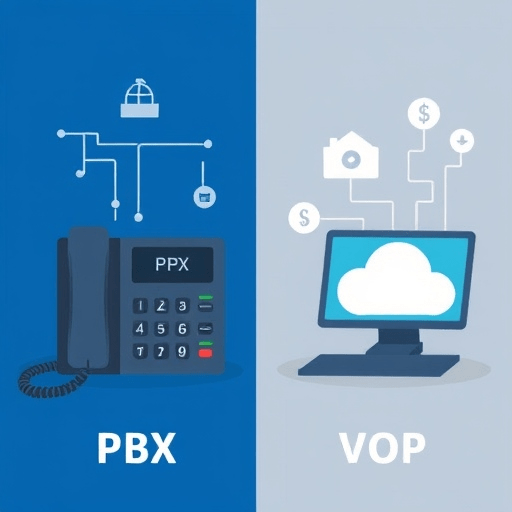
    PBX is a traditional phone system that utilizes physical phone lines and hardware to facilitate voice communication within an organization. It operates independently of the internet, relying on landlines or PRI (Primary Rate Interface) connections. This system is often housed on-premises, requiring significant investment in hardware and maintenance.

    PBX Phone System

    VoIP, on the other hand, transmits voice data over the internet, converting voice signals into digital packets. This technology allows businesses to use their existing internet connection for phone calls, resulting in lower costs and increased flexibility. VoIP systems can be hosted in the cloud, providing access from anywhere with an internet connection.

    Cost Comparison

    One of the most significant differences between PBX and VoIP systems is their cost structure.

    • Upfront Costs: PBX systems typically require a substantial initial investment in hardware, installation, and setup. This can lead to costs that are 60% higher than those associated with VoIP systems, which primarily involve purchasing IP phones and paying a monthly subscription fee.
    • Ongoing Costs: Maintenance of a PBX system often necessitates dedicated IT staff to manage the infrastructure, leading to higher operational costs. In contrast, VoIP services are usually managed by third-party providers, significantly reducing the need for in-house IT resources.

    Scalability

    Scalability is another critical factor when comparing these two systems:

    • PBX Scalability: Expanding a PBX system can be complex and costly. Adding new lines often requires additional hardware installations and modifications to existing infrastructure. This can lead to delays and increased expenses when scaling up operations.
    • VoIP Scalability: VoIP systems excel in scalability. Businesses can easily add or remove users through software configurations without needing significant hardware changes. This flexibility allows companies to adapt quickly to changing needs without incurring substantial costs.

    Features and Functionality

    Both PBX and VoIP offer various features that support business communication; however, they differ in terms of capabilities:

    PBX Phone System
    • Standard Features: Both systems provide essential features such as call forwarding, voicemail, and conferencing. However, VoIP typically includes more advanced functionalities like video conferencing, instant messaging, mobile apps for remote work, and integration with CRM software.
    • Integration Capabilities: VoIP systems are generally better at integrating with other software platforms. This capability enables businesses to create a unified communication experience across different devices and applications.

    Reliability

    Reliability is paramount for any business communication system:

    • PBX Reliability: Traditional PBX systems tend to be more reliable in areas with unstable internet connections since they do not rely on internet access for operation. They often provide superior call quality under adverse conditions.
    • VoIP Reliability: While modern VoIP technology has improved significantly in terms of reliability, it still depends on a stable internet connection. Businesses located in areas with poor internet service may experience disruptions or lower call quality when using VoIP. Additionally, VoIP systems are susceptible to security risks such as hacking incidents, which are less common with traditional PBX setups.

    Flexibility for Remote Work

    The rise of remote work has made flexibility a vital consideration:

    • PBX Limitations: PBX systems are inherently location-dependent due to their reliance on physical hardware at the workplace. This setup can limit remote working capabilities unless additional infrastructure is implemented.
    • VoIP Flexibility: VoIP shines in this area by allowing employees to make and receive calls from anywhere with an internet connection. This feature is particularly beneficial for businesses with remote teams or those that require mobility.

    Security Considerations

    Security is a critical aspect of any communication system:

    • PBX Security: Since traditional PBX systems operate independently from the internet, they are less vulnerable to online threats. However, they still require physical security measures to protect against unauthorized access.
    • VoIP Security: VoIP systems face various online security challenges due to their reliance on internet connectivity. Businesses must implement robust security measures such as encryption and firewalls to protect against potential threats.

    Making the Right Choice

    When deciding between PBX and VoIP systems, businesses should consider several factors:

    1. Business Size and Budget: Larger companies with dedicated IT resources may find value in investing in a PBX system due to its reliability and call quality. Conversely, small to medium-sized businesses often benefit from the cost-effectiveness and scalability of VoIP solutions.
    2. Required Features: Assessing the necessary features for your business is crucial. If advanced functionalities like video conferencing or CRM integration are essential, VoIP may be the better choice due to its broader range of capabilities.
    3. Future Growth Plans: Consider how quickly your business may grow or change in the coming years. If rapid expansion is anticipated, opting for a scalable solution like VoIP will facilitate easier adjustments without incurring hefty costs associated with hardware upgrades.

    Conclusion

    In summary, both PBX and VoIP have distinct advantages that cater to different business needs. While PBX offers reliability and superior call quality under certain conditions, it comes with higher costs and limited scalability. On the other hand, VoIP provides a flexible, cost-effective solution that can adapt quickly as businesses evolve.

    Ultimately, choosing the right communication system hinges on understanding your organization’s specific requirements regarding budget constraints, scalability needs, feature preferences, reliability concerns, and security considerations. By carefully evaluating these factors, businesses can make an informed decision that aligns with their operational goals and enhances overall communication efficiency.

  • How to Optimize Your Business Communication with a PBX System

    How to Optimize Your Business Communication with a PBX System

    A Private Branch Exchange (PBX) system serves as a vital tool for organizations looking to streamline their communication processes. This comprehensive guide explores how businesses can optimize their communication using PBX systems, focusing on key features, benefits, and best practices.

    Understanding PBX Systems

    PBX system is a private telephone network used within an organization that facilitates internal communication among employees and provides external connectivity with clients and partners. By efficiently routing calls, managing multiple lines, and enabling various communication features, PBX systems enhance overall productivity and collaboration.

    PBX Phone System

    Key Features of PBX Systems

    1. Call Routing: PBX systems intelligently route incoming calls to the appropriate extensions, ensuring that callers reach the right person quickly.
    2. Voicemail: Users can receive messages when unavailable, allowing for seamless communication even when direct contact isn’t possible.
    3. Auto-Attendant: This feature greets callers with a recorded message and offers options to direct their calls to relevant departments or individuals.
    4. Conference Calling: Enables multiple participants to join a virtual meeting, fostering collaboration among team members regardless of location.
    5. Call Recording: Businesses can maintain records of calls for quality assurance, training, and compliance purposes.
    6. Scalability: PBX systems can grow with your business, accommodating an increasing number of users and features as needed.

    Benefits of Using a PBX System

    Implementing a PBX system can lead to numerous advantages for businesses:

    • Cost Efficiency: Internal calls within the organization are typically free, significantly reducing telephone bills. Additionally, PBX systems can be configured to use least-cost routing for external calls, optimizing call costs by selecting the most economical path.
    • Improved Customer Service: With features such as call queuing and IVR (Interactive Voice Response), businesses can manage incoming calls more effectively, ensuring that customers are directed to the right department without long wait times.
    • Enhanced Collaboration: Features like conference calling and internal chat functions enable teams to collaborate more effectively, regardless of their physical locations.
    • Unified Communications: Modern PBX systems often integrate with other communication tools such as email and SMS, providing a seamless communication experience across various platforms.

    Steps to Optimize Your Business Communication with a PBX System

    To fully leverage the capabilities of a PBX system, businesses should consider the following steps:

    1. Assess Communication Needs

    Before implementing or upgrading a PBX system, it’s essential to evaluate your organization’s specific communication needs. Consider factors such as:

    • The number of employees who will use the system
    • The types of communication (voice, video, messaging) required
    • Desired features (e.g., voicemail, call forwarding)

    By understanding these requirements, you can select a PBX solution that best fits your organization.

    2. Choose the Right Type of PBX System

    There are several types of PBX systems available:

    • On-Premise PBX: This traditional setup involves installing hardware on-site. While it offers complete control over the system, it may require significant upfront investment and ongoing maintenance costs.
    • Hosted (Cloud) PBX: A cloud-based solution managed by a service provider eliminates the need for on-site hardware. This option is often more cost-effective and scalable, making it suitable for businesses with fluctuating needs.

    When deciding between these options, consider factors such as budget constraints, scalability requirements, and technical expertise available within your organization.

    3. Implement Key Features Strategically

    To optimize communication effectively:

    PBX Phone System
    • Utilize call routing to ensure that incoming calls reach the right departments quickly.
    • Implement an auto-attendant to provide callers with options and reduce wait times.
    • Enable call recording for training purposes and quality assurance.

    By strategically implementing these features, businesses can enhance their overall communication efficiency.

    4. Train Employees

    A well-implemented PBX system is only as effective as its users. Providing comprehensive training for employees on how to use the system’s features is essential for maximizing its potential. Training should cover:

    • How to transfer calls
    • Setting up voicemail
    • Utilizing conference calling features

    Regular training sessions can help ensure that employees remain proficient in using the system as new features are added or updates occur.

    5. Monitor Performance and Gather Feedback

    Regularly monitoring call performance metrics can provide valuable insights into how well your PBX system is functioning. Key metrics to track include:

    • Call volume
    • Average wait time
    • Call abandonment rates

    Gathering feedback from employees about their experiences with the system can also help identify areas for improvement.

    Conclusion

    Optimizing business communication through a PBX system is not just about implementing technology; it’s about creating an environment where effective collaboration can thrive. By understanding the features and benefits of PBX systems and following best practices in implementation and training, organizations can significantly enhance their internal and external communications.

    As businesses continue to evolve in response to changing market demands, leveraging advanced communication solutions like PBX will be critical in maintaining competitive advantage and ensuring seamless connectivity among teams and clients alike.

Design a site like this with WordPress.com
Get started